MOVE | Behind the scenesPlay MOVE ↗

Good movement takes more than one try.

A look at the bear, deer and rat animation studies — the tests, the awkward bits, and the small fixes that add up.

We’re getting better as we go. There’s still work to do.

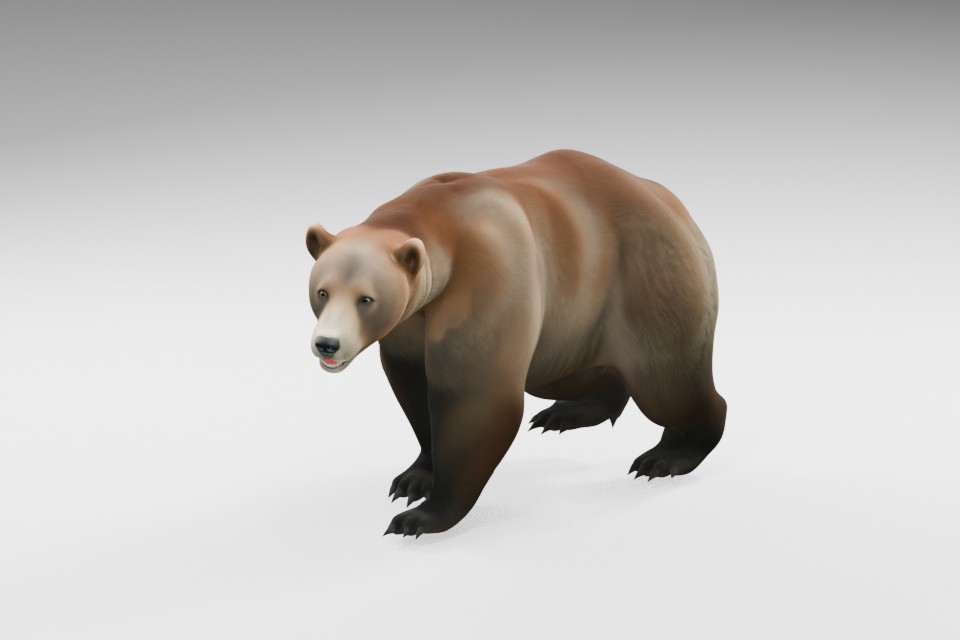
The preserved bear walking study, seen from a three-quarter view on a neutral review stage.
Our bear, partway through the process. An actual saved study render.

From the first test to the next improvement.

October 16–17, 2026 · Selected studies in recorded order. Same-day entries show sequence, not time spent.

Watch at normal speed first. Several reels also include half-speed comparisons. Older labels inside the films describe their status when they were made; the text alongside records later decisions.

  1. 01
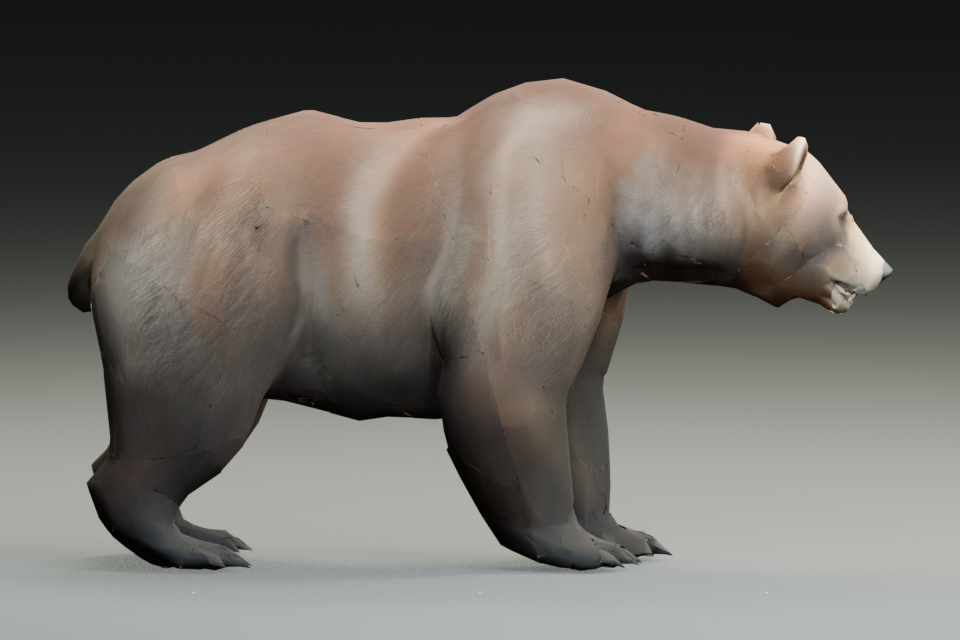
    Our preserved bear in its source rest pose. This is a model study, not wildlife footage.
    Our preserved bear in its source rest pose. This is a model study, not wildlife footage.Saved study image · click to enlarge

    First, watch how the real thing moves.

    Before changing the bear, we studied real charge and walking footage and inspected the rig already in the game. The aim was weight, support and a readable rush — while keeping our existing animal.

    Reference gives us something specific to judge against.

    Research · reference review and rig diagnosis

    Behind this iteration

    The charge reference shows bluff behavior, not a bite. The game’s bite is authored choreography. Third-party footage is linked in the research notes; it is not copied into this page.

    Source record & snapshot note ↗
  2. 02
    Bear v04 · normal-speed action and a slowed bite detail.Silent review film · 21 sec

    The first bear attack.

    Attention, a short rush, a bite and recovery. Early versions curled the paws, so separate paw joints were added. The v04 reel made the idea reviewable — and exposed the next set of problems.

    Getting an animal to move is only the beginning.

    Early study · later revised

    Behind this iteration

    The reel includes side and three-quarter views, a mounted-height camera proxy and a slow bite detail. The proxy contains no horse, rider or game scenery.

    Source record & snapshot note ↗
  3. 03
    Bear v06 · revised action, then a matched shoulder comparison.Silent review film · 11 sec

    Better face. Awkward shoulders.

    The face was improving, but the coat pulled strangely under the front legs. We moved the shoulder and leg pivots and softened the way the skin followed them, preserving the face and attack timing.

    A better pose can expose a problem in the skin underneath.

    Targeted improvement · gait still needed work

    Behind this iteration

    The v06 comparison shows the older and revised shoulder treatment in sync. Improved deformation did not establish a convincing walk.

    Source record & snapshot note ↗
  4. 04
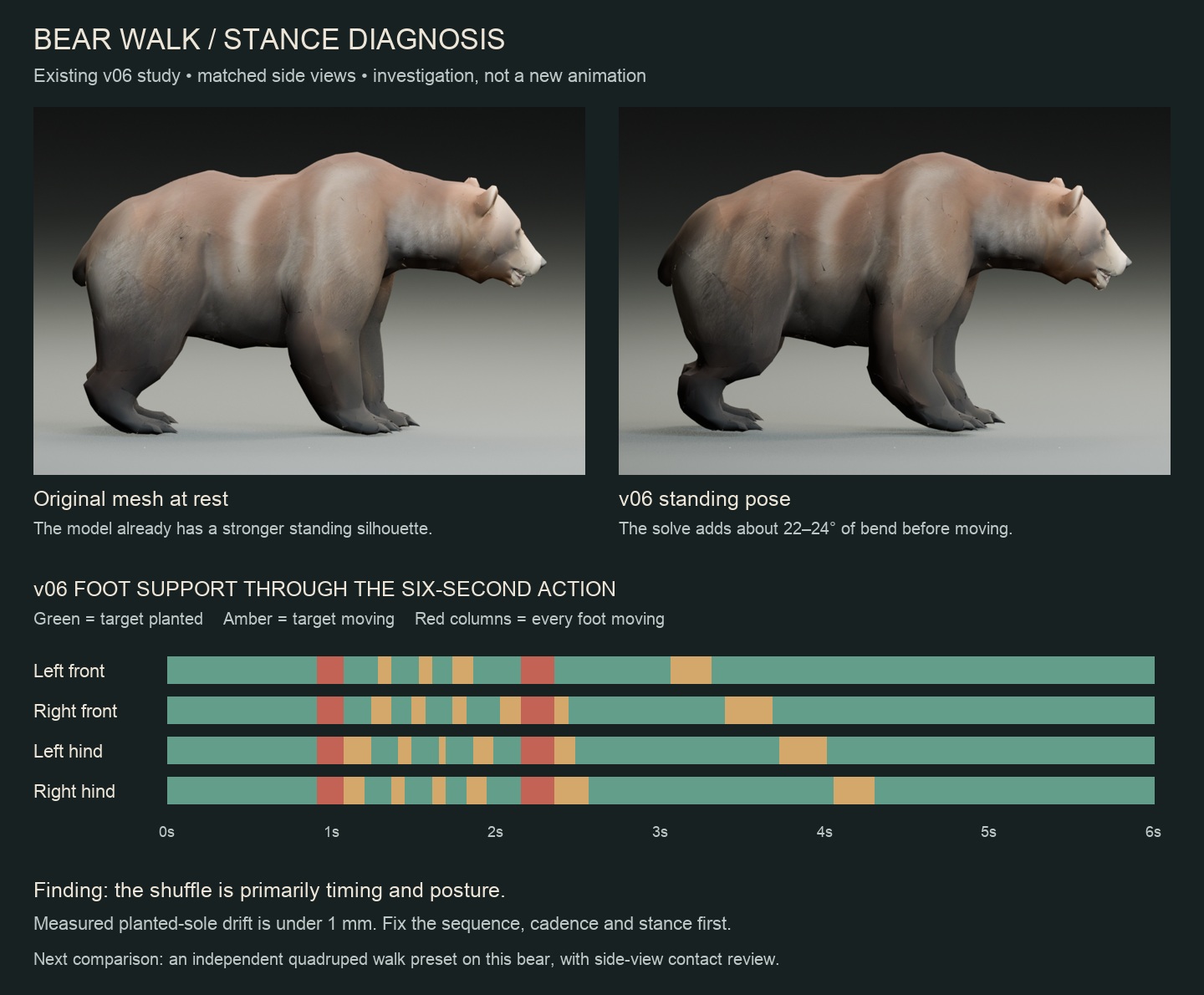
    Saved pose diagnosis · source stance compared with the crouched study.
    Saved pose diagnosis · source stance compared with the crouched study.Saved study image · click to enlarge

    Better legs. Still a shuffle.

    The feedback was clear: the bear still scooted and crouched. A closer walking audit found paired leg timing, unsupported transitions and a cadence too fast to read. Simply locking the feet would miss the larger problem.

    When a fix stalls, step back and diagnose the movement.

    Research · return to stance and a simple walk

    Behind this iteration

    The audit separated actual sliding from the impression of scooting. We also investigated reusable motion tools and existing bear rigs; that research was not a purchase or an accepted replacement.

    Source record & snapshot note ↗
  5. 05
    Untouched walking pilot · normal and half speed. The failure is visible.Silent review film · 10 sec

    The shortcut needed work, too.

    We tried a Meshy quadruped walking preset on the existing bear. It produced an editable clip, but the hind legs folded and the body sank through the floor. A completed export was not a good-looking walk.

    Automation supplies a starting point. It still needs judgment.

    Failed pilot · kept as a comparison

    Behind this iteration

    This was one generic rig fit, not evidence that every fit would fail. The raw export and failed review were preserved before the next local repair.

    Source record & snapshot note ↗
  6. 06
    Previous / refined bear · side and three-quarter, normal and half speed.Silent review film · 10 sec

    A stronger bear, one correction at a time.

    A crossed wrist, stray tail weights and misleading imported bone lengths all needed attention. Correcting the rig and supporting the body produced a stronger stance and a much better base for the walk.

    Small, specific repairs add up to a visible improvement.

    Study accepted for local integration · further polish remains

    Behind this iteration

    The matched reel keeps source timing. The later integration record supersedes the original study’s pending-review label. Acceptance of this walk does not approve every attack, faster gait or terrain transition.

    Source record & snapshot note ↗
  7. 07
    Imported / corrected deer · matched views reveal fit and posture changes.Silent review film · 10 sec

    A new animal. A new set of problems.

    The deer arrived with a turned head, a wobbly walk, off-center joints and a scale change in the imported animation. We corrected the fit and steadied the body while preserving the original model and textures.

    The bear’s lessons help, but the deer still needs its own diagnosis.

    First deer correction · later refined

    Behind this iteration

    Strict side views revealed a turn already present in the source shape. Real deer footage informed broad posture; grass and a pole hid some hoof contacts, so it could not provide exact contact measurements.

    Source record & snapshot note ↗
  8. 08
    Deer contact and neck study · moving body, stationary review floor.Silent review film · 16 sec

    Make the hooves stay put.

    The next pass tied planted hooves to forward travel over a stationary patterned floor. A new neck joint added restrained movement. Even here, an initial footfall-order mistake had to be corrected before review.

    A foot near the floor is not necessarily a planted foot.

    Contact study · neck movement still under review

    Behind this iteration

    The walking speed and contact timings are authored study choices, not measurements extracted from wildlife footage. The moving body and fixed floor make sliding easier to see.

    Source record & snapshot note ↗
  9. 09
    Rejected neck refinement · a useful record of what needed to change.Silent review film · 16 sec

    More movement exposed a hidden flaw.

    We refined the neck and head rhythm while keeping the working gait. Then the feedback caught it: the nose and head looked squashed during motion. Good hoof-contact checks had not protected the face.

    A technically passing test can still look wrong.

    Rejected neck candidate · preserved for comparison

    Behind this iteration

    Only the neck and head animation channels changed in this pass. The later repair found unwanted chest and leg influence in the face and throat; stronger movement made that existing weakness visible.

    Source record & snapshot note ↗
  10. 10
    Rejected / repaired head · matched comparison, full walk and close-ups.Silent review film · 16 sec

    Protect the face. Keep the working walk.

    The skull, muzzle, ears and antlers were made to follow the head together, with a smoother transition through the throat. Plain shaded checks helped catch a crease that the textured coat could hide.

    Fix the cause, then check it from more than one view.

    Repaired study accepted for local integration

    Behind this iteration

    Body and leg motion were preserved. The later integration record updates the original repair note’s pending-review status. Final naturalness and in-game art review remain separate from that study acceptance.

    Source record & snapshot note ↗
  11. 11
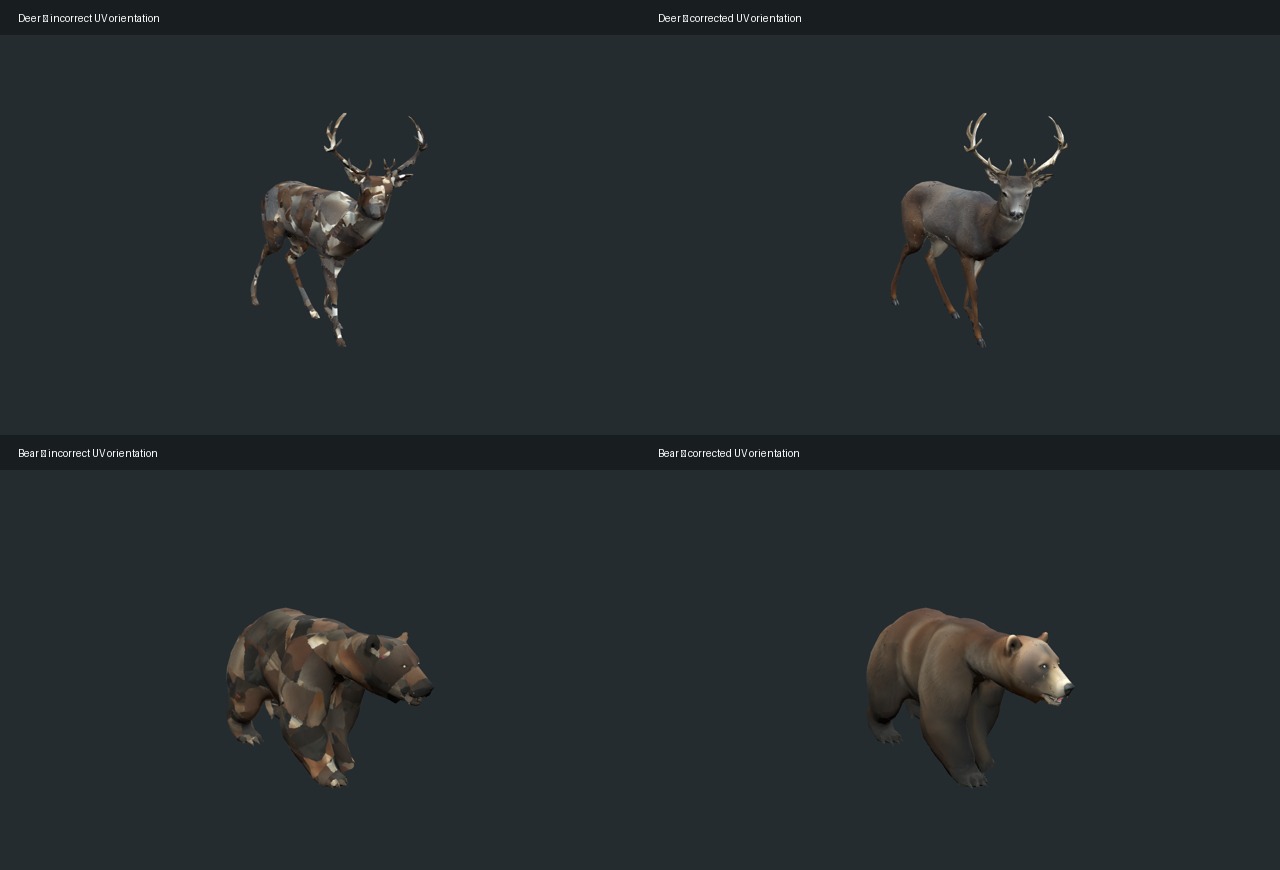
    Before / fixed texture mapping · existing maps, corrected orientation.
    Before / fixed texture mapping · existing maps, corrected orientation.Saved study image · click to enlarge

    Then the game revealed something else.

    The accepted bear and deer studies were brought into the local game. Their coats looked scrambled: Blender and the game read the vertical texture coordinate differently. Correcting that conversion restored the markings.

    Looking right in the authoring tool is another step from looking right in game.

    Local integration and texture repair recorded · unpublished

    Behind this iteration

    These are matched production-renderer texture diagnostics, not a matched gameplay-motion comparison. The integration record also retains countryside route and viewport checks, with device and final art limits stated.

    Source record & snapshot note ↗
  12. 12
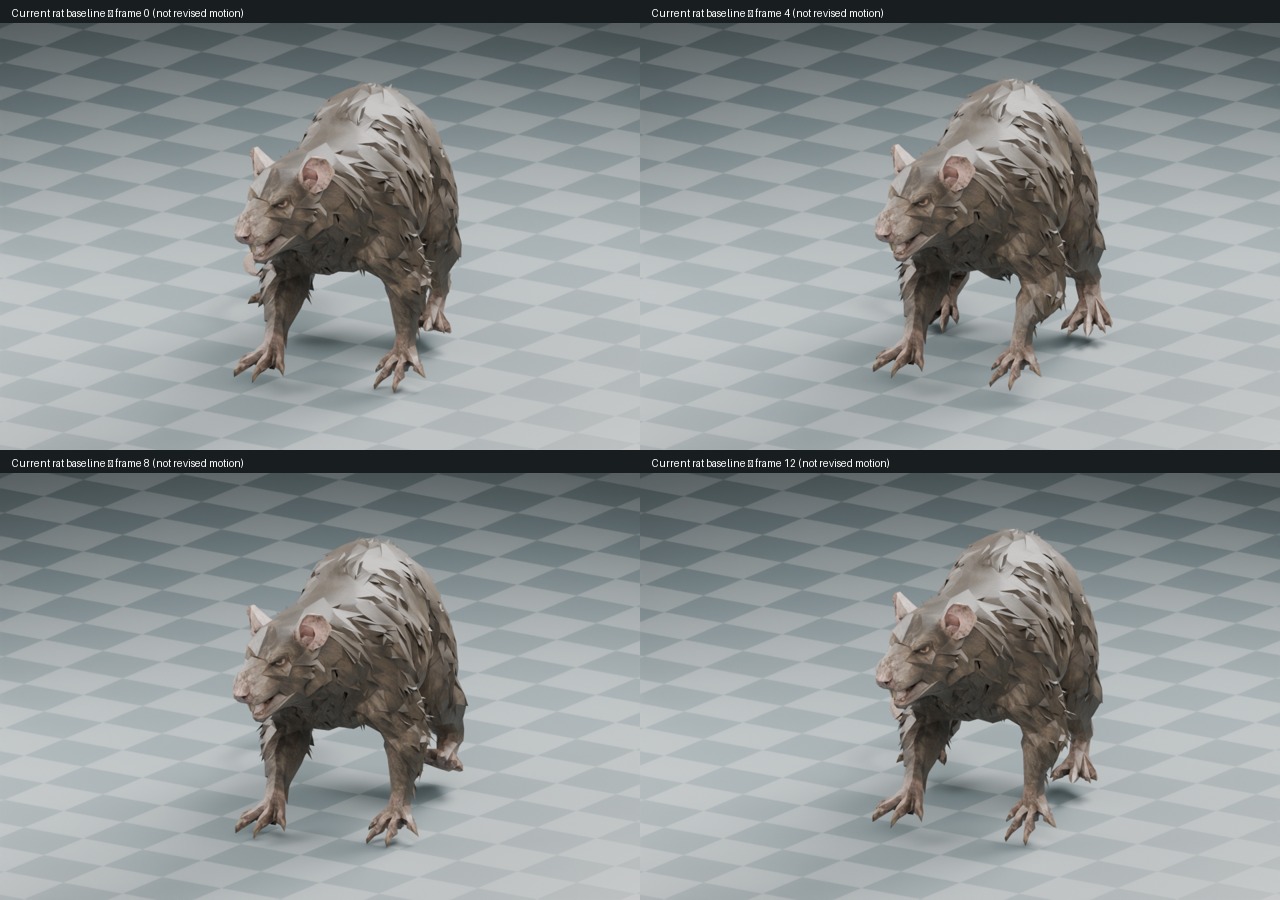
    Preserved rat baseline · several phases and fixed review views.
    Preserved rat baseline · several phases and fixed review views.Saved study image · click to enlarge

    Start the rat by understanding what works.

    The existing rat has its own hunched silhouette, layered coat and paired pursuit motion. Its sampled upper skull was already stable. We kept that identity and separated a slow stalking walk from the faster bound.

    Reuse the method, without copying every fix onto every animal.

    Baseline and diagnosis · game rat preserved

    Behind this iteration

    The rat research notes include paper leads whose supplementary videos were not watched. No biological timing was inferred from those unreviewed clips.

    Source record & snapshot note ↗
  13. 13
    Rat stalking walk · normal speed, alternative views and slowed contact detail.Silent review film · 17 sec

    The paw stayed down. The toes still slid.

    The first rat walk kept its lowest paw points near the floor, yet inner toes slid because they still followed the body. Extending the paw’s rigid region reduced measured stance drift from 207 mm to under 0.3 mm.

    Check the whole paw, not just the point that passes the test.

    Walking review candidate · game rat unchanged

    Behind this iteration

    Those numbers describe this study’s measured contact improvement, not artistic realism. Weight, shoulder folds, toe articulation, turns and faster actions still need review. This page stops at the walking/contact candidate.

    Source record & snapshot note ↗

What the iterations taught us.

Look. Test. Look again.

A side view reveals what a flattering angle hides. A stationary floor reveals sliding. Plain shading reveals folds that fur textures disguise.

Keep what already works.

Preserve the face while repairing the shoulders. Preserve the walk while repairing the neck. Save the old attempt so the improvement can actually be compared.

Numbers help. Eyes decide.

Contact checks can pass while a head looks squashed or toes still skate. Measurements narrow the problem; motion review tells us whether the result feels right.

Getting better.
Still getting there.

Believable movement is built through research, trial, feedback and another pass. Sometimes the next improvement is a new motion. Sometimes it’s finding the one joint, skin weight or texture coordinate that was wrong all along.

These studies show progress, including the awkward stages. The bear and repaired deer were accepted for local integration. The rat walk is still a review candidate. Weight, transitions, faster movement and the way everything feels in the game still need attention.

Every test gives the next one a better place to start.

The work behind the page.

This journal uses preserved MOVE review films and diagnostic renders. It covers the selected animal studies above, rather than the game’s complete animation history. All media here comes from the project; no wildlife footage has been copied into the page.

Research references and evidence limits

These are references recorded in the original study notes, not new research performed for this page. Portable source notes within each iteration identify the original project record and preserve its relevant context. The review films are preserved project evidence; visiting external references opens the original publishers’ pages.

Read the source notes ↗ · Inspect the source list and media hashes ↗

Snapshot: October 17, 2026. Historical authoring snapshot; these study statuses do not describe the contents of the live game. Original and rejected studies remain preserved. Later rat head/lunge work is outside this snapshot.